Manchester Business School case study
Architecture photography that explains scale, public movement and commercial design value
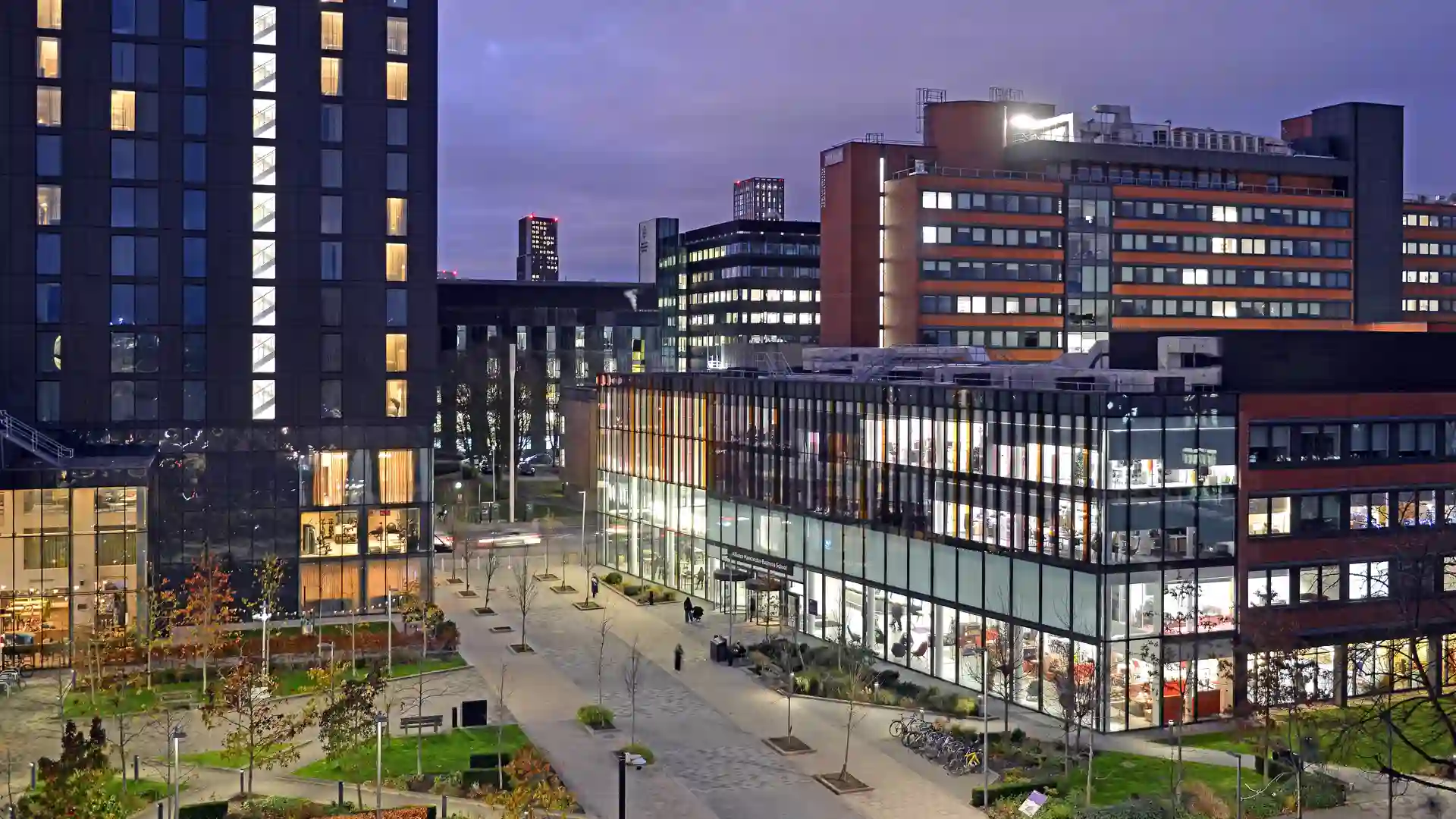
Manchester Business School requires architectural photography that can do more than create a single attractive exterior image. The project needs a visual story that explains arrival, frontage, circulation, material quality, retail presence, daylight, pedestrian movement and the relationship between the building and the surrounding city.
For a destination such as Manchester Business School, the role of an architectural photographer is to make the scheme understandable to several audiences at once. Architects want images that describe design intent. Developers and commercial property teams need photographs that support leasing, asset value and public presentation. Retail and hospitality operators need the place to feel active and accessible. Editors and awards panels need a clear sequence that shows how the project works as a piece of architecture. In 2026, a portfolio page must therefore support search intent, user intent and practical image use without feeling like a generic template.
Nick Caville Architectural Photographer approaches a project page like this by combining wide contextual views with more controlled architectural details. The strongest image set is usually built from layers: a hero image that identifies the project, secondary views that explain the massing and public realm, interior or semi-interior frames that show visitor experience, and detail photographs that record materials, finishes, signage, edges and atmosphere. This structure gives the finished page a clear editorial rhythm and helps the project remain useful long after the original completion date.